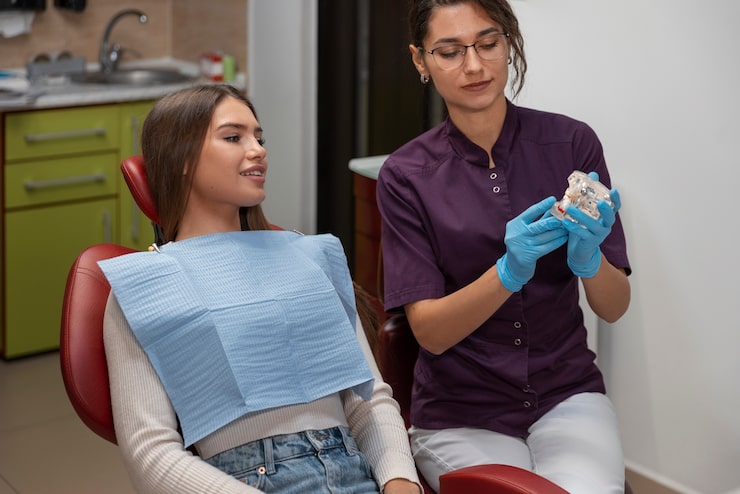
Do you ever look in the mirror and wish your teeth were whiter? Many people feel this way. Teeth can lose their bright colour for many reasons. When teeth become very yellow or dark, a dentist might suggest porcelain veneers treatment near you. Veneers are thin shells. A dentist Edmonton bonds them to the front of the teeth. They look like natural teeth and hide stains that won’t go away with brushing. To understand why someone might need them, it helps to learn about the causes of tooth stains.
Why Do Teeth Change Colour?
Teeth do not stay perfectly white forever. Every day, the mouth comes into contact with food, drinks, and bacteria. Over time, these things change how teeth look. Dentists group these colour changes into two main types. These are intrinsic vs extrinsic tooth stains.
Extrinsic Tooth Stains
Extrinsic stains are on the outside. They stay on the enamel, which is the hard outer layer of the tooth. These stains come from substances that come into contact with the teeth.
- Dark Drinks: Coffee, tea, and soda have dark pigments. These pigments stick to the enamel.
- Foods: Berries, beets, and soy sauce can leave colours behind.
- Smoking: Tobacco contains tar and nicotine. These turn teeth yellow or brown very quickly.
- Poor Cleaning: If a person does not brush well, plaque builds up. Plaque is a sticky film of bacteria. It can make teeth look dull.
Intrinsic Tooth Stains
Intrinsic stains are on the inside. They happen in the dentin. Dentin is the layer under the enamel. These stains are harder to fix because they are deep inside the tooth.
- Medicine: Some antibiotics, like tetracycline, can stain teeth if taken as a child.
- Injury: If a tooth is hit, the inside may bleed, or the nerve may die. This turns the tooth grey or dark purple.
- Too Much Fluoride: While fluoride is good for teeth, having too much as a kid can cause white spots.
- Aging: As people get older, the white enamel gets thinner. The yellow dentin beneath is becoming more visible.
How Porcelain Veneers Help
Sometimes, store-bought whitening gels do not work. This is usually true for intrinsic stains. In these cases, porcelain veneer treatment is a great choice, especially when looking at different causes of tooth stains that cannot be cleaned easily.
A dentist removes a tiny bit of enamel to make room. Then, the dentist glues the porcelain shell to the tooth. Porcelain is strong. It also resists stains better than natural enamel. This means the new smile stays bright for a long time.
Keeping Your Smile Bright
It is important to care for the mouth. Here are simple tips
- Brush Twice a Day: Use a soft toothbrush to remove food bits.
- Floss Daily: Clean the spaces where a toothbrush cannot reach.
- Visit the Dentist: Professional cleanings remove the hard buildup that regular brushing misses.
- Drink Water: Rinsing the mouth with water after eating dark foods helps prevent stains.
If stains do not improve with cleaning, a dentist may suggest porcelain veneers treatment near you to help improve the look of teeth and support a brighter smile.
Transform Your Smile with Porcelain Veneers
Albany Dental offers porcelain veneers to improve stained, chipped, or uneven teeth. Porcelain veneers are thin dental covers placed on front teeth to improve smile appearance and support better dental alignment. Our dentist checks tooth health before treatment to ensure safe results. We focus on natural, long-lasting smile improvement for patients who need cosmetic dental care. Book a consultation at Albany Dental for a healthier smile.
Frequently Asked Questions
What is the main difference between intrinsic and extrinsic stains?
Extrinsic stains are on the surface of the tooth (enamel). They usually come from food and drinks. Intrinsic stains are inside the tooth (dentin). They come from factors such as medication, age, or injury.
Can a dentist remove all stains with a cleaning?
A cleaning can remove most extrinsic stains caused by food or plaque. However, cleaning cannot remove intrinsic stains within the tooth. For those, a dentist may suggest veneers.
Does porcelain veneer treatment hurt?
The process is usually very comfortable. Dentists often use a local anesthetic to numb the area. This ensures the patient does not feel pain while the teeth are being prepared.
How long do porcelain veneers last?
If a person takes good care of them, veneers can last 10 to 15 years. It is important to avoid biting hard objects, such as ice or pens.
Why should I look for porcelain veneers treatment near you?
Finding a local dentist makes it easy to go to check-up appointments. The dentist needs to check the gums’ health and ensure the veneers remain bonded correctly.